Author: sulgreto

Forse un giorno mi spingerò più lontano

Forse un giorno
mi spingerò più lontano.
Fin dove si scorgono
nuovi mondi.
Ora rimango arresa.
Ammainata sulla riva
vedo tutto ciò che passa.
Mi fa paura questo andare avanti,
l’affrettarsi verso un infinito
che non ci appartiene.
Ma molto di più temo
tutta quella vita lasciata indietro.
Poco distante
fisso un anonimo merlo
mi guarda
e in quell’istante
siamo due vite
imbarcate in un attimo
sulla zattera del Caso.

¬ Anna A Sulgreto ¬


Maybe one day
I will leap forward away
where my eye will meet
uncharted new worlds.
For now, I surrender.
Folded on the beach
I gaze everything passing
and I dread such moving forward,
hurrying toward an infinite
which does not belong to us.
But even more, I fear
all that life
left behind.
Not far
I glance at an unsung blackbird:
it peeks at me
and in that very moment
the two lives of us
suddenly board
the raft of case.

¬ Anna A Sulgreto ¬

O. Mandel’ŝtam – Armenia I

Tu muovi la rosa di Hafiz,
cresci bambini-bestiole,
respiri da spalle ottagonali
di rustiche chiese bovine.

Dipinta di rauca ocra sei
tutta oltre il monte, lontana:
solo una figurina, qui, già asciutta
dell’acqua, su un piattino.

OSIP MANDEL’ŜTAM – VIAGGIO IN ARMENIA I [A cura di S. Vitale, Adelphi]


Armenia, you cradle the rose of Hafiz,
and nurse your brood of wild children.
Your breathing is the breathing of rough peasant churches,
with their octagonal, bullish shoulders.

Coloured with hoarse ochre,
you lie far over the mountain,
while all that is here is a transfer,
soaked free in a saucer of water.

OSIP MANDEL’ŜTAM – THE MOSCOW NOTEBOOKS [Translated by Richard and Elizabeth McKane]

F. Pessoa – Le isole fortunate

Che voce ha il suono delle onde
Che non è quella del mare?
La voce di uno che a noi parla,
Ma che, se ascoltiamo, tace,
Per aver noi ascoltato.

E solo se, in dormiveglia,
Senza saper di udire udiamo,
Ci mormora la speranza
Cui, come un bimbo che dorme,
Dormendo noi sorridiamo.

Sono isole fortunate,
Sono terre senza luogo,
Ove dimora il Re in attesa.
Ma, se ci andiamo destando,
Tace la voce, è solo mare.

FERNANDO PESSOA – MESSAGGIO, QUARTO, Le isole fortunate [Traduzione di Francesco Zambon, Molesini Editore]


What voice comes in the sound of the waves
That is not the voice of the sea?
It is the voice of someone who speaks to us,
But that, if we listen, shut up,
Because there was listening.

And only if, half asleep,
Not knowing how to hear we hear,
That she tells us hope
The one who, like a child
Asleep, sleeping we smile.

They are fortunate islands,
They are lands without a place,
Where the King lives waiting.
But if we wake up,
Shut up your voice, and there is only the sea.

FERNANDO PESSOA – MESSAGE, Fourth, The fortunate islands [The English translation is by Jackie Joseph © June 2020]

O. Mandel’ŝtam – Non occorre dire niente

Non occorre dire niente
non occorre insegnare niente,
è così triste e buona
la buia anima selvatica:

non vuole insegnare niente,
non sa affatto parlare
e nuota come un giovane delfino
per le canute voragini del mondo.

OSIP MANDEL’ŜTAM – LA PIETRA [A cura di G. Lauretano, ilSaggiatore]


There is no need for words:
nothing must be heard.
How sad, and fine,
an animal’s dark mind.

Nothing it must make heard:
it has no use for words,
a young dolphin, plunging, steep,
along the world’s grey deep.

OSIP MANDEL’ŜTAM – STONE [Translated by A. S. Kline]

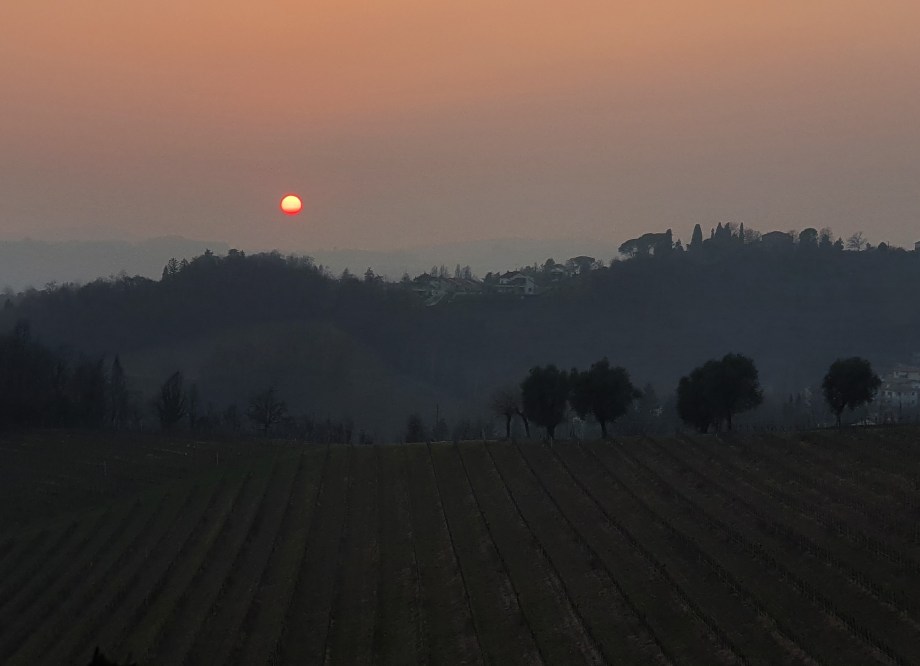
Se solo potessi dipingere

Se solo potessi dipingere
le delicate tinte pastello
stese come un velo
sull’inquieta sera

se solo potessi sentirmi
tenue parte
del primaverile tramonto

allora
sarei dono
anch’io
che lieve dissolve.

¬ Anna A Sulgreto ¬


If I could only paint
those fine pastel hues
drawn as veil
over the troubled evening

if I could only feel
a wither shade
of the springy sunset

then
I would be myself:
a gift
who gently faints.

¬ Anna A Sulgreto ¬

A. Puskin – 85 (1834)

È tempo, amica mia, è tempo! Il cuore chiede pace –
Volano i giorni dopo i giorni, e ogni ora si porta via
Una particella di vita, tu ed io, noi due
Pensiamo di vivere, e invece, guarda, ecco che moriamo.
Al mondo non c’è felicità, ma c’è la pace e la libertà.
Da tempo io sogno un invidiabile destino –
Da tempo, stanco schiavo, ho pensato a una fuga
In una lontana dimora di fatiche e pure tenerezze.

ALEKSANDR PUSKIN – POESIE [a cura di E. Bazzarelli, Rizzoli]


It’s time, my friend, it’s time! The peace is craved by heart –
Days flow after days – each hour departs
A bit of life – and both, you and I,
Plan a long life, but could abruptly die.

The world hasn’t happiness, but there is freedom, peace.
And long have I daydreamed the life of bliss –
And long have planned, a tired slave, the flight
To the removed abode of labor and delight.

ALEKSANDER PUSKIN – POESIE (1834) [Translated by Yevgeny Bonver, August 1995]

C. Campo – Sull’attesa

[…] Ieri sera, tra il sonno, una frase mi attraverò la mente: “Quando una creatura degna del tuo amore rifiuta di incontrarti in un punto, è perché ti aspetta in un punto più alto.” […]

[Lettera a Mita – 176, Adelphi]

[…] Evidentemente c’è il tempo necessario all’attesa. Io come lei attendo, da dieci mesi, e non le dico le forme di questa attesa perché in parte le sa e in parte non sono comunicabili. Ma la cosa giusta verrà al momento giusto se non turberemo con moti scomposti il lavoro del Tessitore. […]

[Lettera a Mita – 180, Adelphi]

[…] Non so che una parola: abbandono. “Il sentimento di non riuscire a tenere le cose in mano” – è veramente un sentimento terribile; ma forse può divenirlo meno se ricordiamo che le cose sono sempre in altre mani, che i piani si fanno sempre altrove. […]

[Lettera a Mita – 214, Adelphi]


[…] Yesterday night, while dreaming, a sentence came to my mind: “When a creature worth of your love refuses to meet you in a given point, it is only because he is waiting for you further above”. […]

[CRISTINA CAMPO – From “Lettere a Mita” Adelphi | 176]

[…] Clearly, there is a time devoted to waiting. Like you I’m waiting as well, since ten months, and I can not tell you the shapes of this wait as in part you already know them, and in part they are not explicable. But the right thing will come at the right moment if we are not going to disrupt the Weaver work with our awkward actions. […]

[CRISTINA CAMPO – From “Lettere a Mita” Adelphi | 180]

[…] I just know only one word: abandonment. “The feeling of not being able to grasp things with our own hands” – it is a truly awful feeling; but it might ease if we remind that things always end in other hands, and plans always happen in other places. […]

[CRISTINA CAMPO – From “Lettere a Mita” Adelphi | 214]

Sogna con me

Sogna con me, dice, guardando lontano
la pace forgiata da poche parole
e da un grande faticoso perdono.

¬ Anna A Sulgreto ¬


Dream with me, it says, far gazing
the peace forged by few words
and by a long grievous forgiveness.

¬ Anna A Sulgreto ¬

C. Pavese – The night you slept

Anche la notte ti somiglia,
la notte remota che piange
muta, dentro il cuore profondo,
e le stelle passano stanche.
Una guancia tocca una guancia –
è un brivido freddo, qualcuno
si dibatte e t’implora, solo,
sperduto in te, nella tua febbre.

La notte soffre e anela l’alba,
povero cuore che sussulti.
O viso chiuso, buia angoscia,
febbre che rattristi le stelle,
c’è chi come te attende l’alba
scrutando il tuo viso in silenzio.
Sei distesa sotto la notte
come un chiuso orizzonte morto.
Povero cuore che sussulti,
un giorno lontano eri l’alba.

[The night you slept, 4 Aprile 1950, dalla raccolta VERRA’ LA MORTE E AVRA’ I TUOI OCCHI] Le Poesie, CESARE PAVESE, 2020, Einaudi]


Even the night looks like you,
the far away night crying
silent, inside a deep heart,
and the stars pass by tired.
A cheek touches a cheek –
it is chill shiver, someone
struggles and begs you, alone,
lost in you, in your fever.

In the night it suffers and longs for the dawn,
poor gasping heart.
Oh stony face, dark anguish,
fever that saddens the stars,
there is who, like you, is waiting for the dawn
searching your face in silence.
You lies under the night
as a locked dead horizon.
Poor gasping heart,
one far way day you were the dawn.

CESARE PAVESE – April 4 1950 – DEATH WILL COME HAVING YOUR EYES [translated by me]

Dickinson – 1051

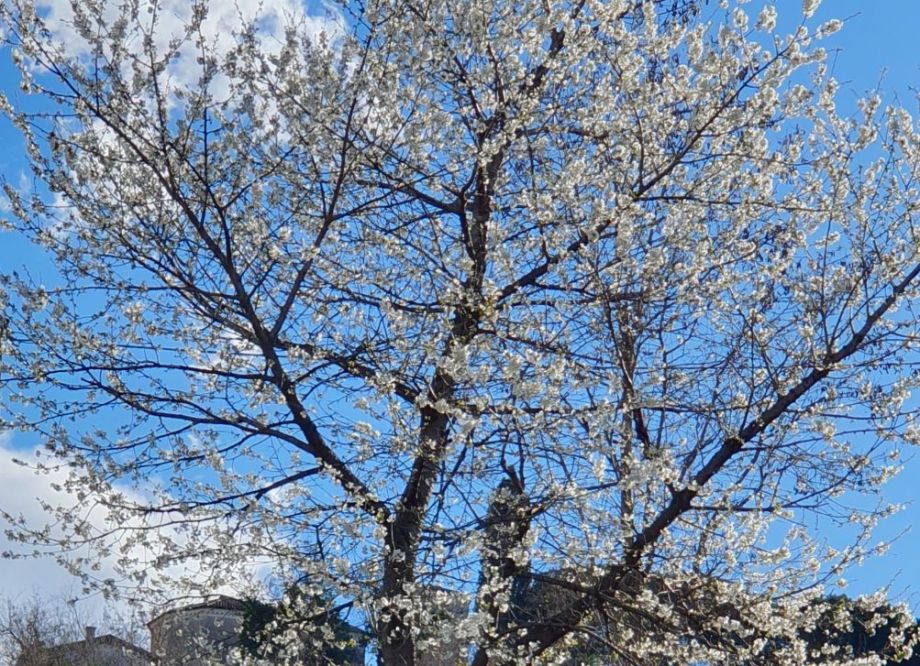
I cannot meet Spring unmoved –
I feel the old desire –
A Hurry with lingering, mixed,
A Warrant to be fair –

A Competition in my sense
With something hid in Her –
And as she vanishes, Remorse
I saw no more of Her.

EMILY DICKINSON – POEMS, 1051


Non so incontrare la Primavera senza commozione –
Provo l’antico desiderio –
Un’Urgenza con l’indugio, mescolati,
Una Licenza di essere bella –

Una Competizione nei miei sensi
con qualcosa nascosto in Lei –
E quando svanisce, il Rimorso
di non aver visto di più di Lei.

EMILY DICKINSON – POEMS, 1051